I get some version of this question from readers every month: Astana or Almaty, which one should I actually see? And every time, my answer is the same. It depends on what you want out of the trip.
I left Almaty as a kid in the 1990s, and I still have family there. So I’ll admit some bias toward the mountain city. But I’ve spent enough time in Astana, watching it grow from a construction site into an actual skyline, to know it deserves a real look too. This guide breaks down the numbers, the climate, the transit, and the nightlife so you can decide for yourself. For a deeper look at Almaty specifically, our complete Almaty city guide covers the details this article doesn’t have room for.
In This Article
- What’s the Real Difference Between Astana and Almaty?
- Cost of Living: Astana vs Almaty, Which City Costs More?
- Real Estate and Rental Yields: Where Does Your Money Go Further?
- Climate and Geography: Mountains vs Steppe
- Getting Around: Metro, LRT, and the Transit Face-Off
- Astana vs Almaty for Tourism: Which City Should You Visit First?
- Nightlife Face-Off: Almaty vs Astana After Dark
- Why Kazakhstan Has Two Capitals: The 1997 Move Explained
- FAQ
- Which City Fits Your Trip

Alma Zharkyn left Almaty as a child in the 1990s and has been returning almost every year since. She writes Almaty Guide for American travelers who want practical, current information from someone who still has family in the city.
What’s the Real Difference Between Astana and Almaty?
Almaty is the money. Astana is the government. That’s the difference in five words, and almost everything else in this article flows from it.
Almaty holds around 2.35 million people and generates close to 23% of Kazakhstan’s entire GDP, driven by banking, retail, and corporate headquarters. Astana sits at roughly 1.6 million people but is growing fast, absorbing over 81,000 net internal migrants in just eleven months of 2025 as public sector jobs and construction pull people north.
Here’s the thing though: this isn’t a small-town-versus-big-city story. Astana vs Almaty is really a story of two different economic engines. One runs on private capital and legacy commerce. The other runs on state spending and rapid, planned expansion. Neither city is trying to be the other.
Cost of Living: Astana vs Almaty, Which City Costs More?
Almaty costs more. Depending on the source, Almaty runs anywhere from 29% to 41% more expensive than Astana overall, according to cost of living tracking by Expatistan. That gap shows up everywhere, from rent to a plate of plov, and it’s the single biggest factor in most cost of living Astana vs Almaty comparisons you’ll find online.
A one-bedroom apartment in central Almaty runs $645 to $768 a month. The same apartment in central Astana runs $472 to $553. Dinner for two at a mid-range restaurant costs $39 to $44 in Almaty versus $29 to $35 in Astana. Utilities on an 85-square-meter apartment can run up to 38% higher in Almaty too.
But there’s a catch. Astana’s residents actually earn slightly more on average, between 389,000 and 400,000 KZT a month after tax, compared to 376,000 to 378,000 KZT in Almaty. Lower costs plus higher wages means Astana residents end up with local purchasing power that’s roughly 18.6% to 22.9% stronger than Almaty’s, based on the Numbeo cost of living index for both cities.
| Expense | Almaty | Astana |
|---|---|---|
| 1-bed apartment, city center | $645 – $768/mo | $472 – $553/mo |
| Dinner for two, mid-range | $39 – $44 | $29 – $35 |
| Basic utilities, 85 m² apartment | $64 – $88/mo | $55 – $64/mo |
| Monthly transit pass | $21 | $16 |
| Average net salary | $795/mo | $821 – $843/mo |
So what does that actually mean for you? Your dollar simply stretches further in Astana, whether you’re there for a week or a year. If budget is the deciding factor, that’s your answer right there.
Real Estate and Rental Yields: Where Does Your Money Go Further?
Entry-level housing prices are nearly identical in both cities. Economy apartments run 660,000 to 736,000 KZT per square meter in Almaty and 680,000 to 723,000 KZT in Astana. This is where the story gets interesting, though, because the moment you move up-market, the two cities split hard.
Business-class apartments in Almaty run about 1,600,000 KZT per square meter, roughly double Astana’s benchmark of 800,000 KZT. A two-bedroom business-class unit costs around 107 million KZT in Almaty versus 43 million KZT in Astana. That’s a 2.5x gap for comparable square footage.
Land scarcity explains most of it. Almaty sits in a mountain basin with limited room to expand, especially in desirable districts like Bostandyk and Medeu. Astana has open steppe on every side, so builders just keep adding supply.
| Metric | Almaty | Astana |
|---|---|---|
| Economy price per m² | 660,000 – 736,000 KZT | 680,000 – 723,000 KZT |
| Business class price per m² | ~1,600,000 KZT | ~800,000 KZT |
| Average gross rental yield | ~9.0% | ~10.75% |
That yield gap matters if you’re weighing an investment rather than a vacation. Astana’s lower entry prices mean landlords collect a bigger percentage return, even though Almaty commands the highest absolute rents in the country.
Climate and Geography: Mountains vs Steppe
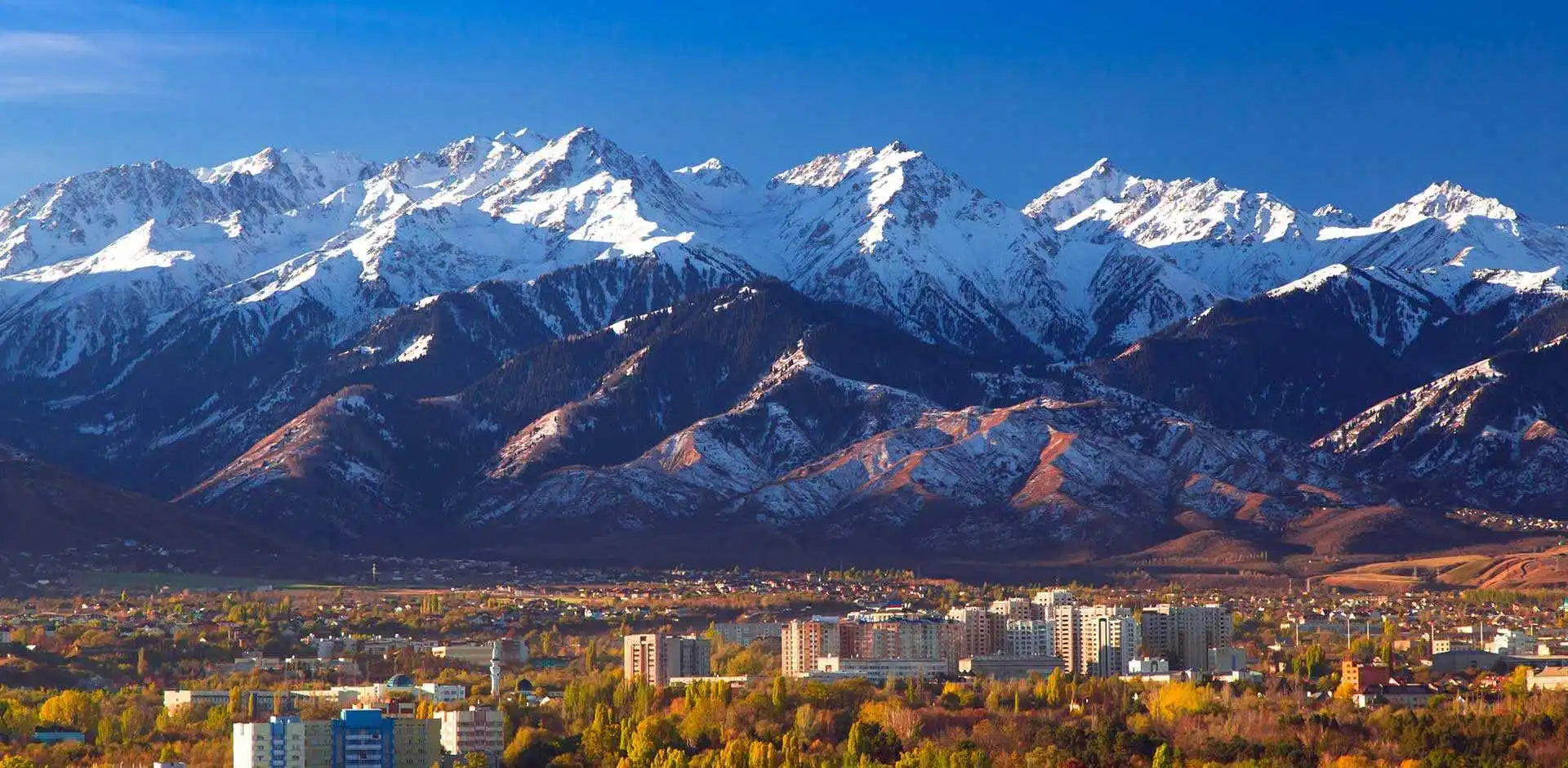
This one isn’t close. Almaty sits at the foot of the Trans-Ili Alatau mountains, with a mild-for-the-region climate and January highs hovering around freezing. Astana sits exposed on open steppe, and it’s the second-coldest capital city on earth after Ulaanbaatar.
Winter in Astana means January lows near minus 15°C on average, with wind chill pushing the real feel well below that. Almaty’s winters are cold too, but nowhere near as brutal, and the mountains give the city genuine scenery you can hike, ski, or just stare at from a coffee shop window.
- Almaty: annual mean temperature 9.1°C to 10.4°C, higher rainfall, occasional winter smog from thermal inversion
- Astana: annual mean temperature 1.9°C to 3.9°C, lighter rainfall, cleaner air thanks to constant steppe wind
- Almaty: seismic activity is a real, if low-probability, consideration
- Astana: brutal wind chill and heavy snow removal needs, but no earthquake risk
Worth pausing on that for a second. Almaty’s air quality dips in winter because the surrounding mountains trap smoke and exhaust in the basin. If you’re sensitive to air quality, plan an Almaty trip for spring, summer, or early fall.
Getting Around: Metro, LRT, and the Transit Face-Off
Astana just leapfrogged Almaty on transit, and it happened fast. In my experience covering this region for years, infrastructure promises in Kazakhstan often slip. This one didn’t.
Astana’s fully automated, driverless light rail line opened to the public on May 16, 2026, running 22.4 kilometers across 18 stations, connecting the international airport to the Left Bank government district and the main railway terminal. It’s Central Asia’s first system of its kind, and trains run every five to ten minutes with no driver at all.
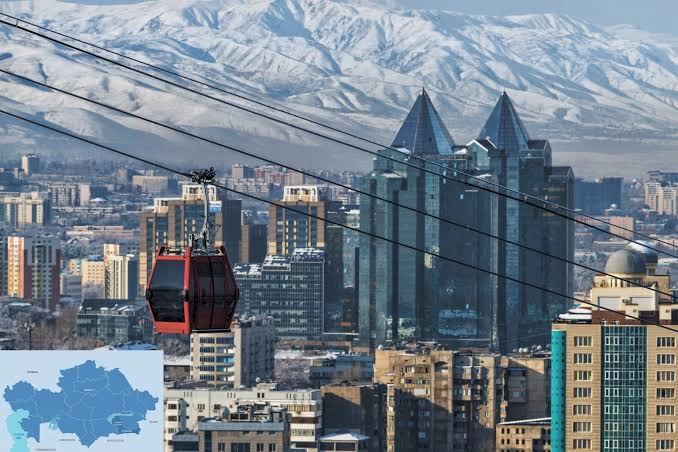
Almaty, meanwhile, is still leaning on its underground metro and a growing bus fleet. The Kalkaman station extension is set to open in 2026, and city planners are targeting a jump from 1.6 million to 3 million daily transit trips by 2030.
- Almaty: underground metro expanding west, over 600 new municipal buses added in 2025, surface LRT Line 2 planned for 2035
- Astana: driverless GoA4 automated LRT, airport to city center in roughly 40 minutes end to end
And it gets more complicated. Factor in cost, and Astana’s transit pass runs about 24% cheaper than Almaty’s, so the newer system is also the more affordable one to actually use.
Astana vs Almaty for Tourism: Which City Should You Visit First?
If this is your first trip to Kazakhstan, go to Almaty first. It has the mountains, the older architecture, the bazaars, and a food and culture scene that Astana, built largely from scratch since the late 1990s, simply hasn’t had time to grow.
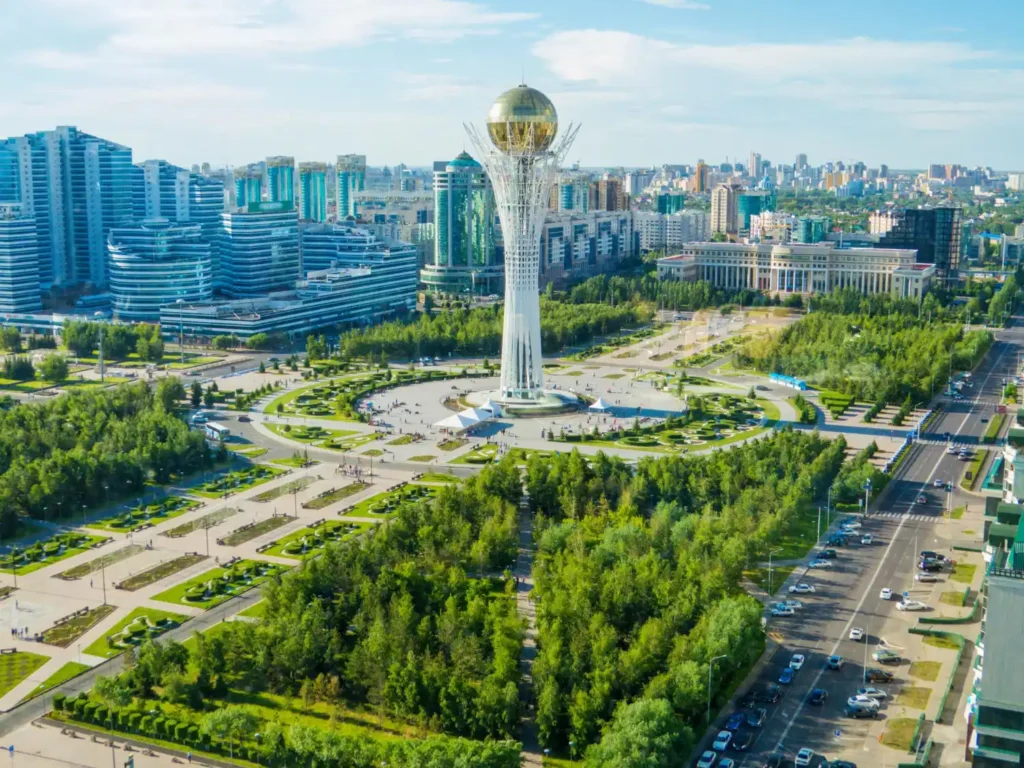
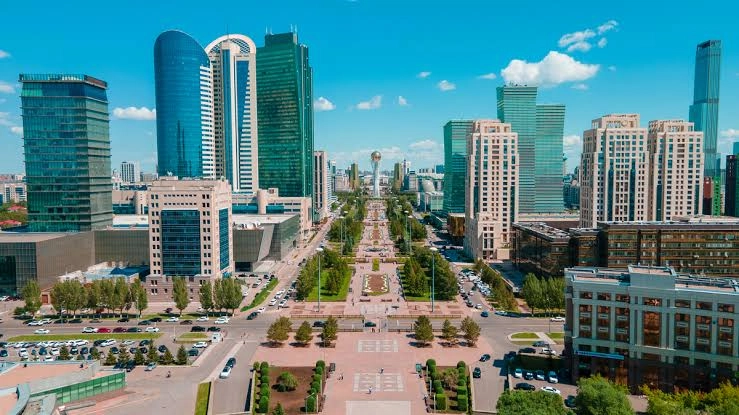
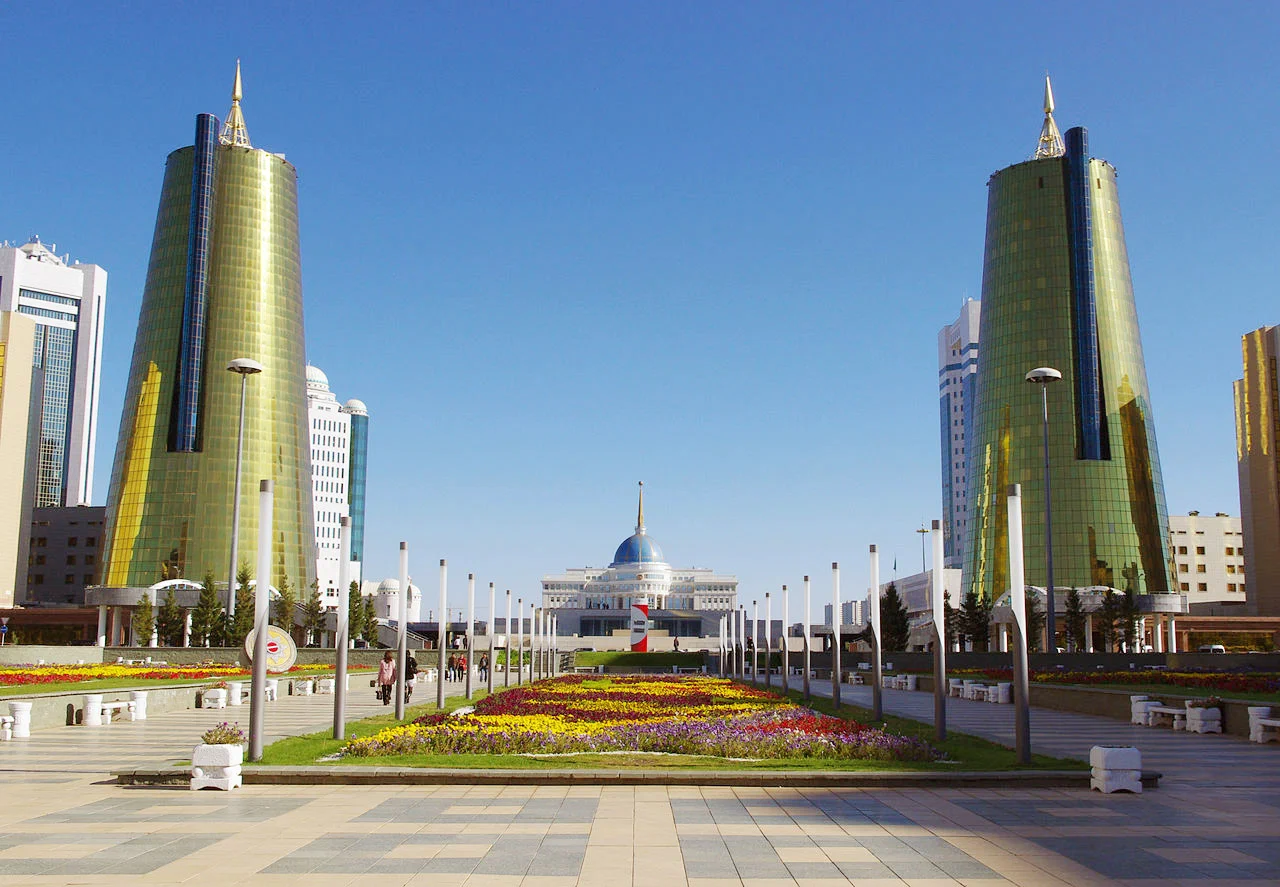
Astana is worth the trip too, just for different reasons. The Left Bank district looks like nowhere else on earth, with Bayterek Tower, the Khan Shatyr entertainment center, and a skyline that keeps expanding. Now that the new automated LRT connects the airport straight into that district, getting there and moving around has never been easier.
For American travelers specifically, safety shouldn’t be a major worry in either city. The U.S. State Department rates Kazakhstan at Level 1, its lowest advisory tier, meaning normal precautions apply nationwide.
“People ask me every year which city to put first on the itinerary. I always say Almaty, because you can’t get those mountains back on a return trip. But don’t skip Astana. It’s a completely different kind of Kazakhstan, and it’s changing faster than almost anywhere I’ve covered.”
Alma Zharkyn, Founder and Lead Writer, Almaty Guide
The short answer? It depends. Give it four or more days and see both. With less, Almaty gives you more per day.
Nightlife Face-Off: Almaty vs Astana After Dark
Almaty vs Astana nightlife isn’t really a fair fight, at least not yet. Almaty has decades of restaurant, bar, and club culture layered into its neighborhoods, especially around the city center and the newer developments near Dostyk Avenue. Astana’s scene is younger, more corporate, and clustered heavily around the Left Bank hotels and entertainment complexes.
That said, Astana isn’t dead after dark. Big hotel bars, a handful of rooftop lounges, and events tied to the government and business calendar keep things moving. It just feels more curated and less organic than Almaty’s.
Let me explain. In Almaty, you can walk between three or four bars in one neighborhood. In Astana, distances between venues are longer, and taxis or the new LRT become part of the plan rather than an afterthought.
Why Kazakhstan Has Two Capitals: The 1997 Move Explained
Kazakhstan moved its capital from Almaty to Akmola, later renamed Astana, on December 10, 1997. It remains the only capital relocation anywhere in the post-Soviet world, and the reasoning behind it still shapes how these two cities function today.
Almaty’s location created real problems. The city sits in a seismically active zone, hemmed in by mountains with almost no room to expand. It’s also tucked in the far southeast corner of the country, less than 300 kilometers from the Chinese border, which made governing a nation this large from that corner inefficient.
There was a demographic angle too. Northern Kazakhstan had a large ethnic Russian population after the Soviet collapse, and moving the seat of government north helped tie that region more firmly into the new independent state. A state commission reviewed 32 separate criteria, from seismic stability to water access, before settling on Akmola over other contenders like Karaganda and Aktobe.
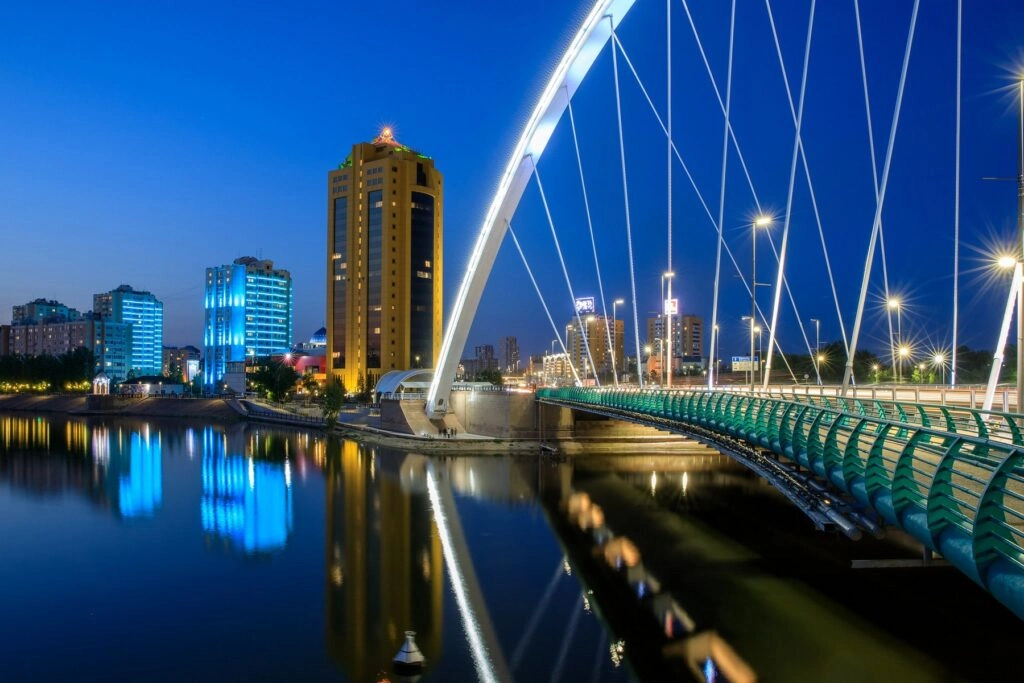
So why does this matter to a traveler today? Because it explains why Almaty feels lived-in and layered, while Astana feels engineered and new. Neither is better. They’re just built for entirely different purposes.
FAQ
Is Almaty or Astana better for a first-time visitor to Kazakhstan?
Almaty is the better first stop for most travelers. It offers mountain scenery, historic architecture, and a food and culture scene built up over more than a century. Astana rewards visitors too, but its appeal leans more toward modern architecture and planned urban design than the layered, walkable character Almaty offers. If your trip only allows for one city, Almaty gives you a more complete picture of Kazakhstan in a shorter visit.
Why did Kazakhstan move its capital from Almaty to Astana?
The government cited seismic risk, land constraints from Almaty’s mountain-basin location, and the country’s far southeastern positioning as the main reasons for the 1997 move. There was also a demographic and geopolitical motive, since relocating the capital to the north helped integrate a region with a large ethnic Russian population into the new independent state. A state commission evaluated 32 criteria before selecting the site that became Astana.
Is Astana cheaper than Almaty?
Yes, in nearly every category. Rent, dining, utilities, and transit all run lower in Astana, with overall cost of living estimated at 29% to 41% less than Almaty depending on the source. Despite that, Astana residents earn slightly higher average salaries, which gives the capital a real purchasing power advantage over Almaty for anyone living there long-term.
How do you get between Almaty and Astana?
Domestic flights connect the two cities in roughly ninety minutes and run frequently throughout the day, making them the fastest and most practical option for travelers. High-speed rail links also exist for those who prefer to see the countryside, though the trip takes considerably longer than flying. Most visitors splitting their trip between both cities choose to fly one direction and consider the train only if time allows.
Which City Fits Your Trip
Almaty vs Astana isn’t really a competition, even though the framing makes it sound like one. They’re two different Kazakhstans built for two different jobs, and the “winner” depends entirely on what you came for.
Want mountains, culture, and a city that feels like it’s had time to settle into itself? Almaty is your answer, and it’s still where I send most first-time visitors, family bias or not. Want to see a capital built at speed, with brand-new transit and a skyline still under construction? Astana delivers that in a way almost nowhere else on earth does right now.
But the real question is this: how much time do you have? Give yourself four days or more and you can genuinely do both, flying between them and coming away with a fuller picture of Kazakhstan than either city offers alone.
Sources
- Bureau of National Statistics, Agency for Strategic Planning and Reforms of Kazakhstan. “Almaty City Population Statistics.” stat.gov.kz, 2026.
- Qazinform News Agency. “Kazakhstan’s Population Continues Growth in 2025.” Qazinform, 2026.
- Railway Gazette International. “President Opens Astana Automated Light Metro Line.” Railway Gazette, 2026.
- Expatistan. “Cost of Living Comparison: Almaty vs Astana.” Expatistan, 2026.
- Numbeo. “Cost of Living Comparison Between Almaty and Astana.” Numbeo, 2026.
- U.S. Department of State. “Kazakhstan Travel Advisory.” Travel.State.Gov, 2026.