Nature · Day trip
Your gateway to Kazakhstan
Where is Almaty, how big is its population, and what’s it actually like on the ground? This guide to Kazakhstan’s largest city covers the essentials, then everything you need to plan a real trip.
Start with the essentials
Airport, metro, weather and local know-how in one place.
Find your Almaty
Landmarks, museums and local favourites
Canyons, parks and mountain trails
Airport, metro and trip-planning basics
Culture, history and useful context
Popular right now
Nature · Day trip
City landmark
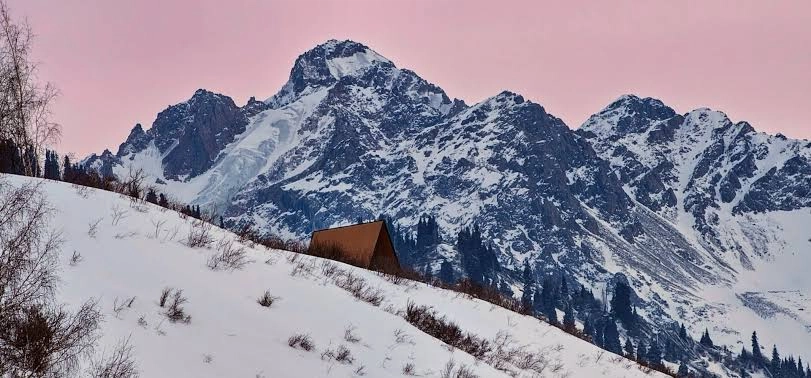
Mountains · Winter
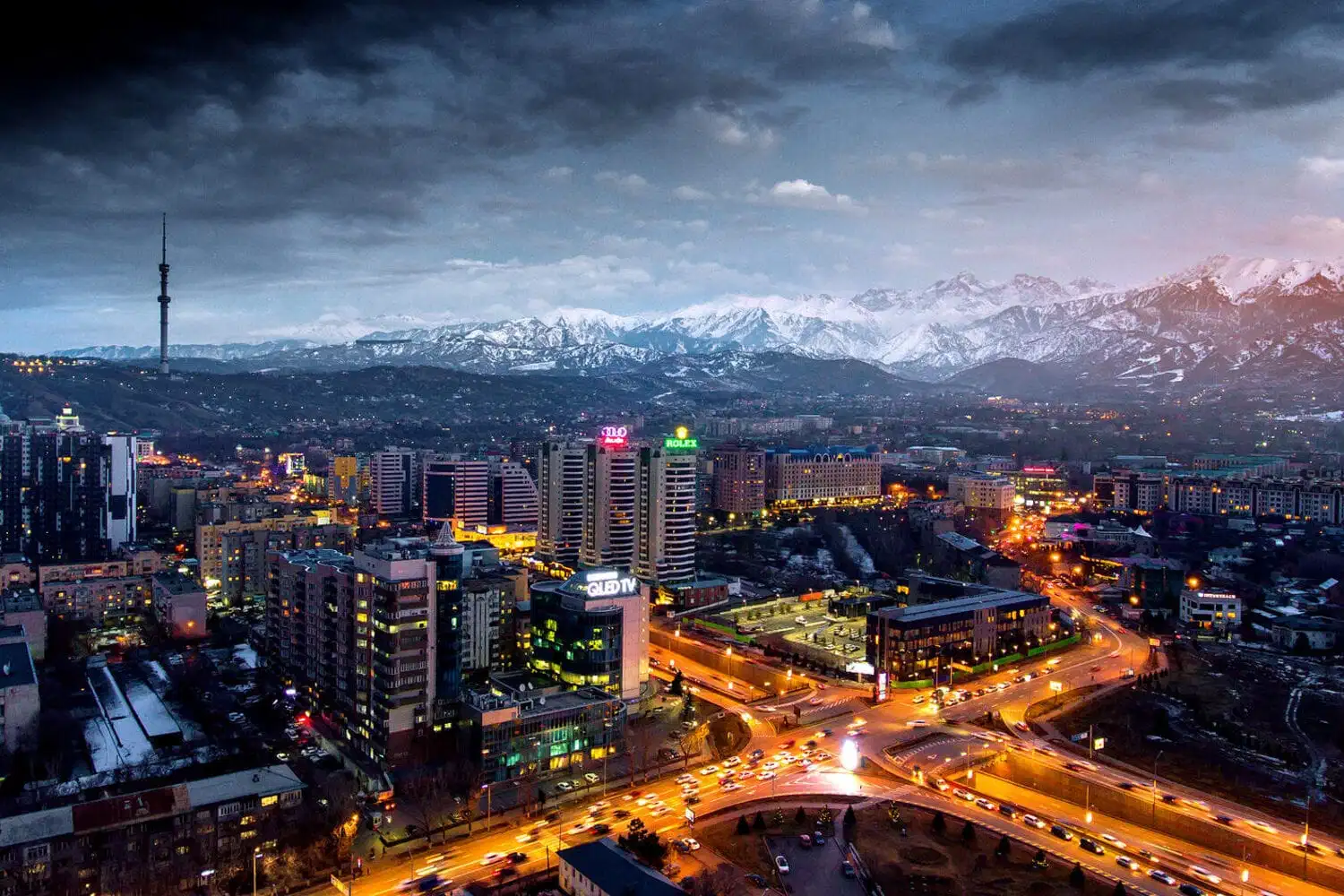
Travel made simple
Clear, current guides to the airport, metro and everyday travel — written to answer the question you have right now.
The bigger picture
Almaty is more than a stop on a map. Set in the foothills of the Trans-Ili Alatau mountains, it is the largest city in Kazakhstan, home to more than two million people, and the country’s cultural and financial heart even though it stopped being the political capital in 1997.
Keep reading for the full picture: exactly where Almaty is located, how its population and elevation compare to the rest of the country, the story behind its name, and everything you need to plan a trip.
Quick facts
2.18–2.35M
Almaty population, 2026 estimate
500–1,700m
Almaty elevation range
1st
Largest city in Kazakhstan
8
Administrative districts
1929–1997
Years as national capital
Southern Capital
Common nickname today
This snapshot answers the most common questions travelers and researchers ask about Almaty in a single glance. The sections below go deeper on each point, from the exact geography behind almaty altitude to the full history of how a Russian imperial fort became Kazakhstan’s largest city.
Location
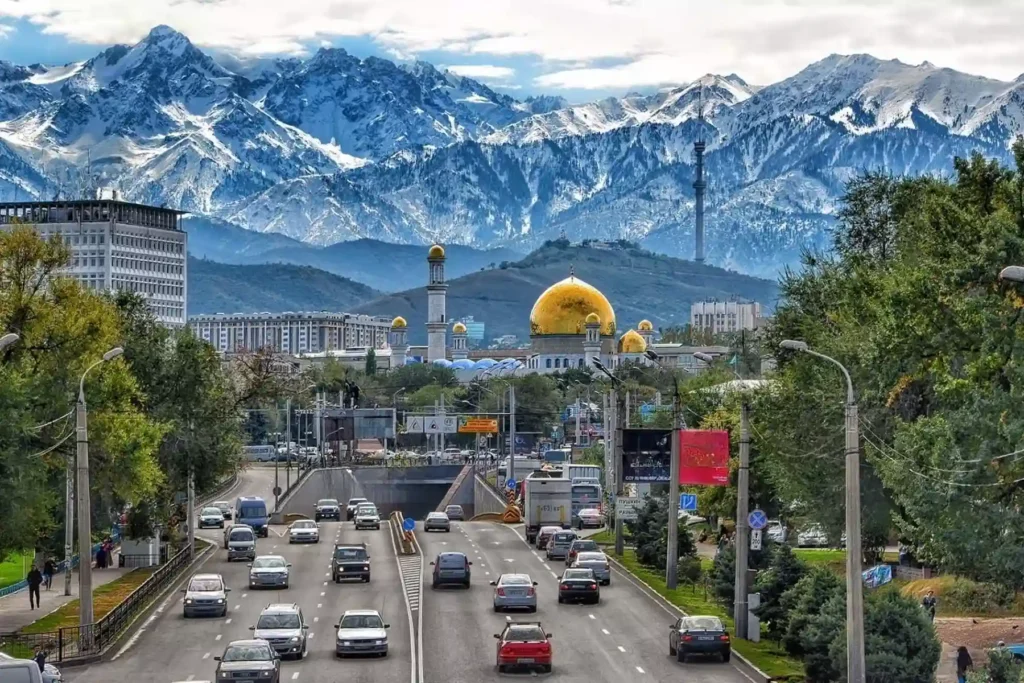
If you are asking where is Almaty, the short answer is southeastern Kazakhstan, in a natural basin at the foot of the Trans-Ili Alatau range, the northernmost chain of the Tian Shan mountain system.
The coordinates for the city center sit close to 43°14′N, 76°57′E, a short drive from the border with Kyrgyzstan. Where Almaty is located matters for more than geography trivia, because the city’s position against the mountains drives its climate, its earthquake risk, and its layout.
Almaty is not built on flat ground. It climbs the lower slopes of the range, which is why almaty altitude varies so widely from one neighborhood to the next.
That range in almaty elevation is one of the more unusual facts about the city. Few metro areas anywhere shift more than a kilometer between neighborhoods, and it is part of why Almaty feels different from the flat steppe cities further north. Visitors arriving from sea level should expect a noticeably thinner, drier atmosphere the moment they land, particularly if their hotel sits in one of the higher southern districts.
Almaty is governed separately from the surrounding Almaty Region, which has its own population, economy, and local administration. When a source cites statistics for kazakhstan almaty, check whether it refers to the city or the wider region, since the two are frequently confused and produce very different numbers. Search almaty kazakhstan and you will find plenty of scattered facts across dozens of sites. This guide keeps the essentials in one place: kazakhstan almaty city functions as the country’s financial capital, not its political one. That role belongs to Astana, far to the north. Almaty holds the banks, the stock exchange, the universities, and, by most measures, the culture.
Population
The population of Almaty has grown from a small imperial garrison town into one of the largest cities in Central Asia.
| Year | Population of Almaty |
|---|---|
| 1906 | 27,000 |
| 1926 | 46,000 |
| 1939 | 221,000 |
| 1979 | 909,644 |
| 2023 | 2,228,500 |
| 2026 (estimate) | 2.18 to 2.35 million |
That trajectory makes Almaty the largest city in Kazakhstan by a wide margin, well ahead of Astana and every other kazakhstan town, most of which sit in the 300,000 to 500,000 range. A visitor asking where Almaty ranks among Kazakhstan’s cities is really asking a simple question with a simple answer: first, in nearly every category that matters.
Almaty is also one of the most ethnically diverse cities in Central Asia, home to more than 100 nationalities.
Good to know
The Almaty Region surrounding the city has its own population of roughly 2.08 million, a higher share of ethnic Kazakhs, and a younger age profile than the city itself. When current population of Almaty figures are cited without specifying city or region, check the source directly.
History
Almaty’s story runs from nomadic settlement to Silk Road town to imperial fort to Soviet capital to modern financial hub, and each stage left a visible mark on the city that stands today.
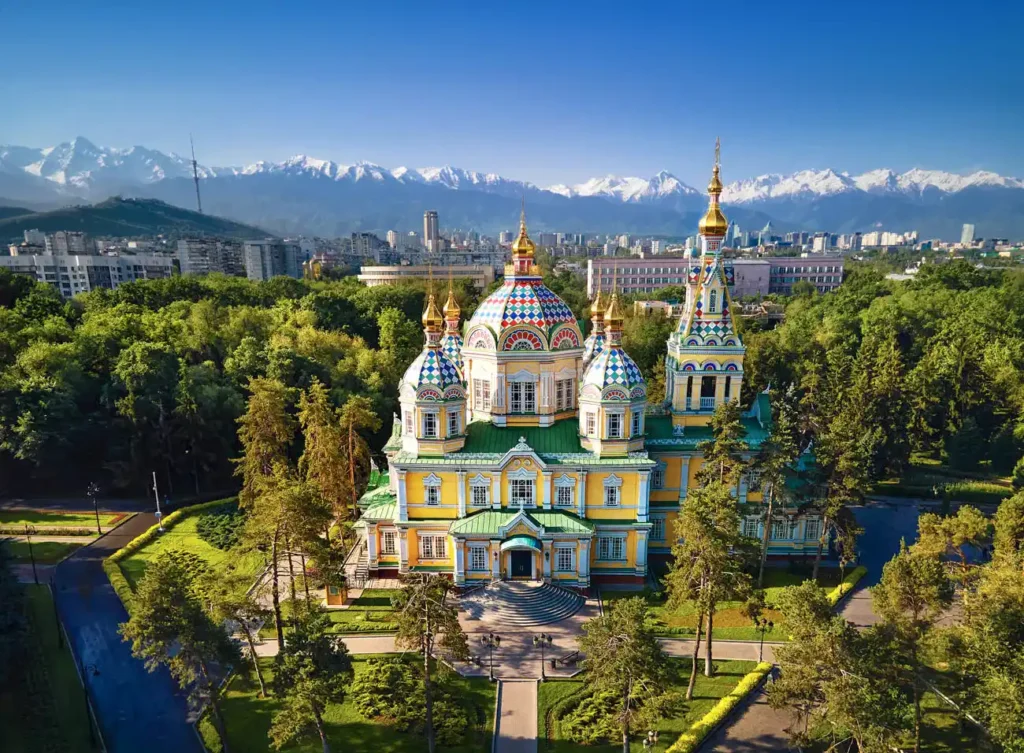
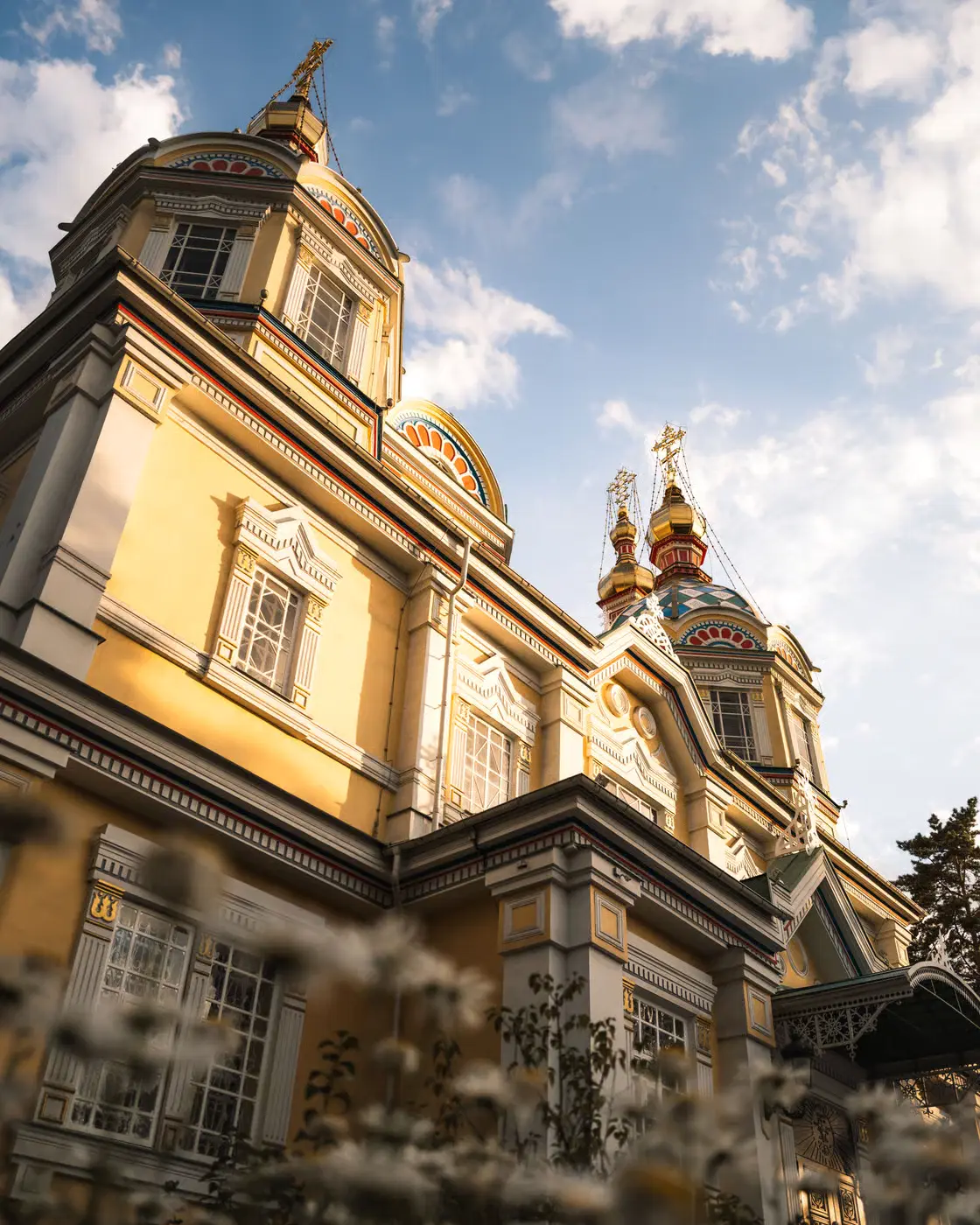
Built between 1904 and 1907 without a single metal nail, using flexible timber-frame techniques designed to absorb seismic shocks, this cathedral survived the catastrophic 1911 earthquake, a magnitude 8.2 event, completely intact while the brick buildings around it collapsed. At 56 meters, it still stands in Panfilov Park today and remains the most photographed building in the city.
Geography
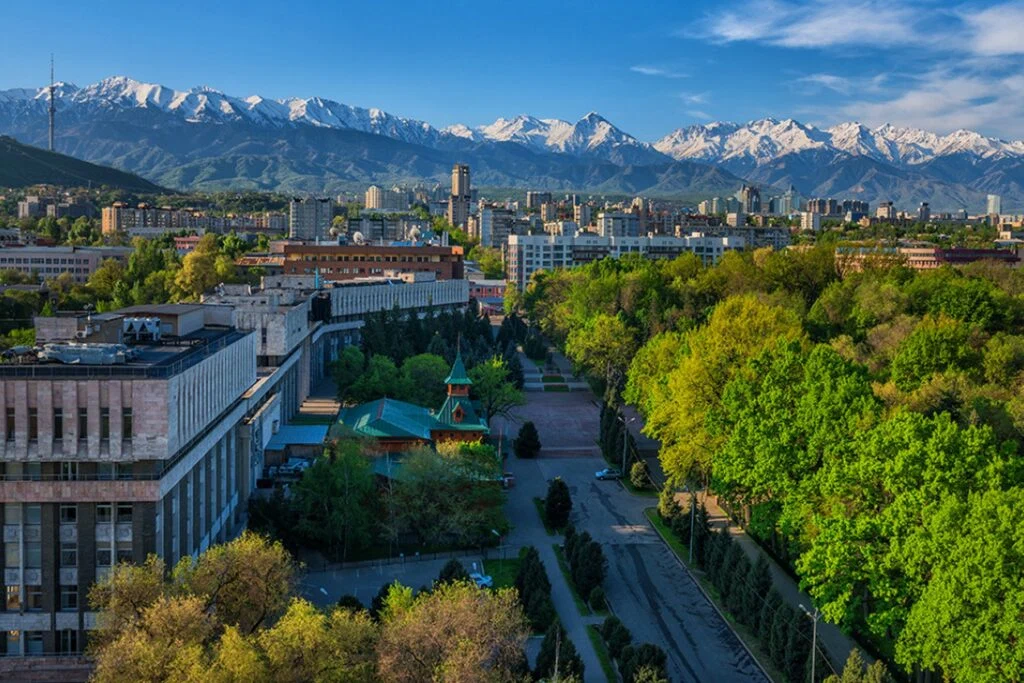
Almaty’s setting below the Trans-Ili Alatau shapes daily life in the city more than any other single factor. Talgar Peak, on the southern skyline, reaches 5,017 meters, a constant visual reminder of why almaty altitude varies so much across the city.
Economy
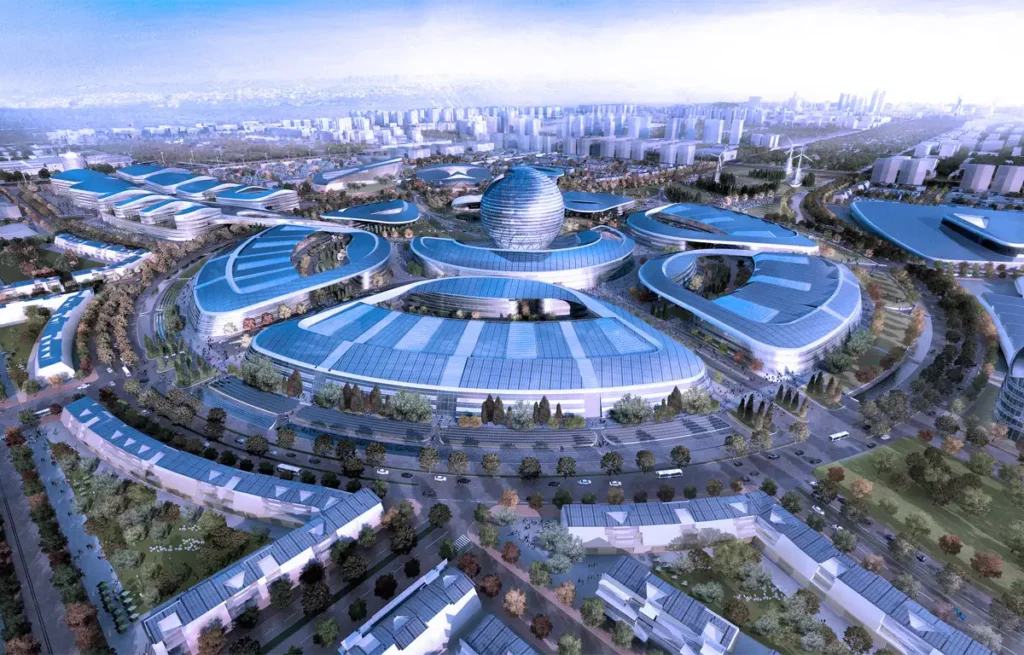
Almaty generates roughly a fifth of Kazakhstan’s entire GDP without holding political capital status, a remarkable share for a city that has not been the seat of government since 1997.
Two capitals
| Feature | Almaty | Astana |
|---|---|---|
| Role | Cultural and financial capital | Political and administrative capital |
| Setting | Foothills of the Trans-Ili Alatau | Flat steppe along the Ishim River |
| Climate | Milder, mountain-influenced | Extreme continental, harsh winters |
| Character | Historic, tree-lined, walkable | Planned, modern, monumental |
| Landmark | Ascension Cathedral | Bayterek Tower |
Choose Almaty for mountains, history, food, and a walkable center. Choose Astana for modern architecture and government institutions. Most travel itineraries that cover both cities treat Almaty as the highlight.
Highlights

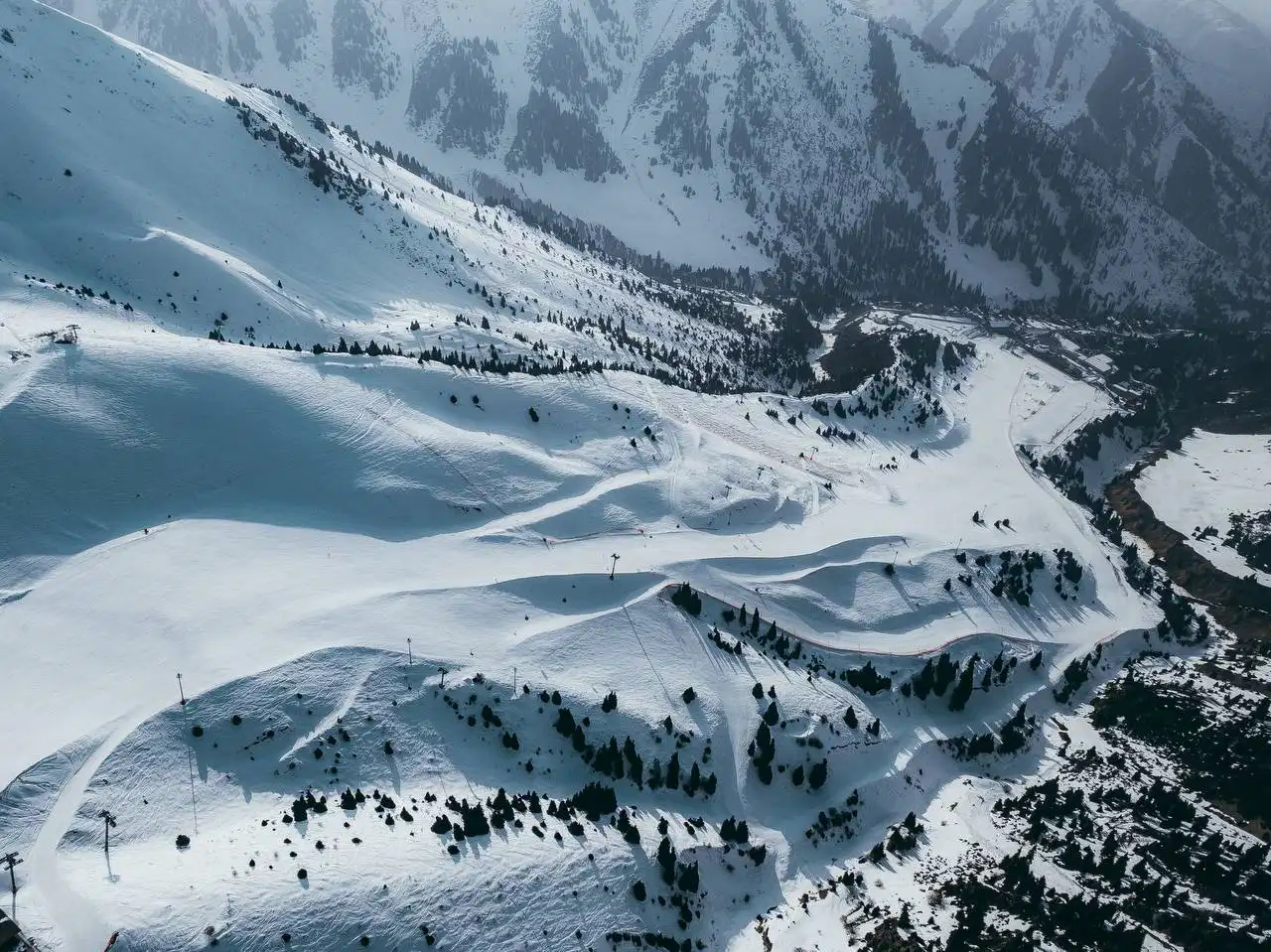
Mountains · Winter
The world’s highest-altitude skating rink, connected by gondola to Central Asia’s leading ski resort.
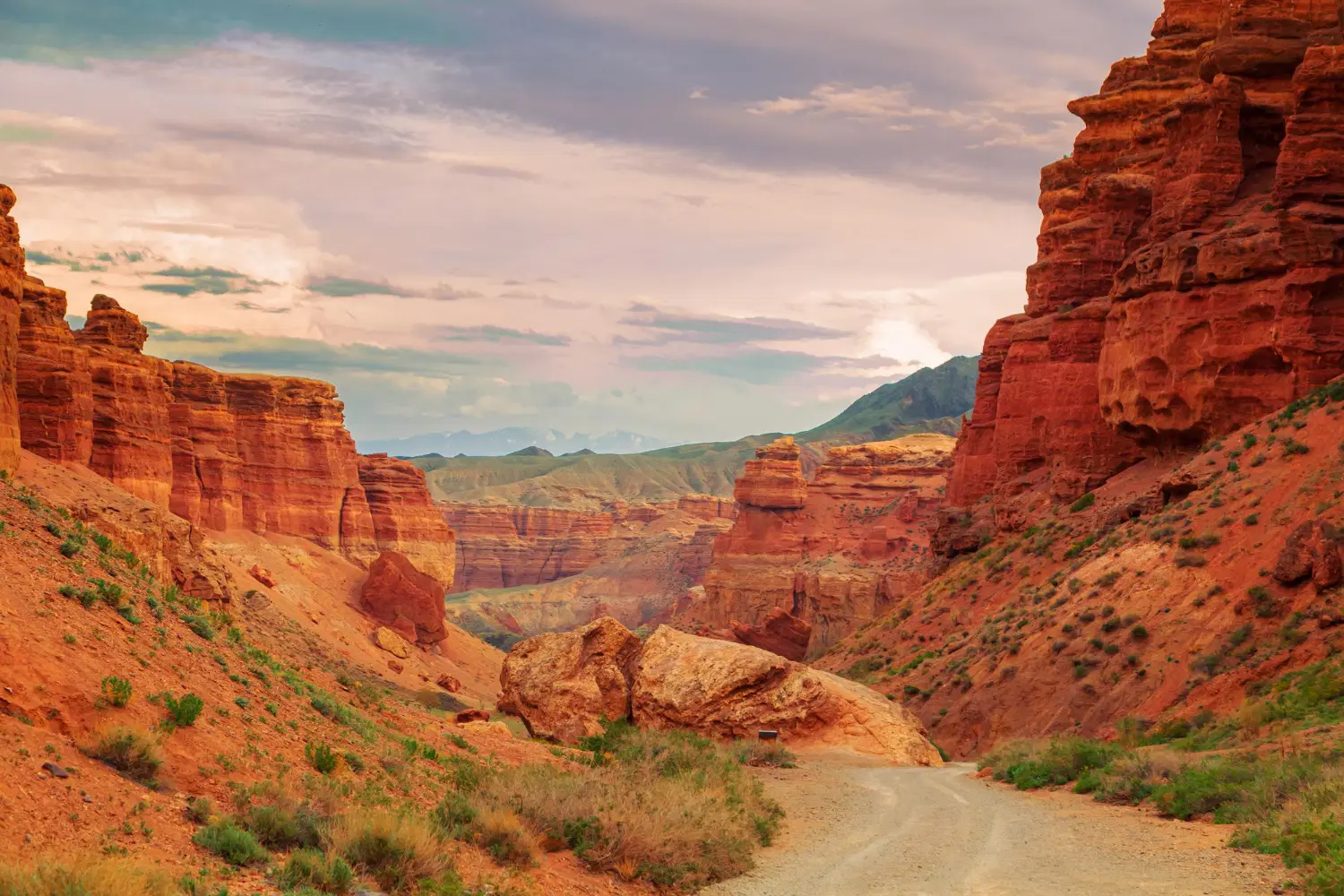
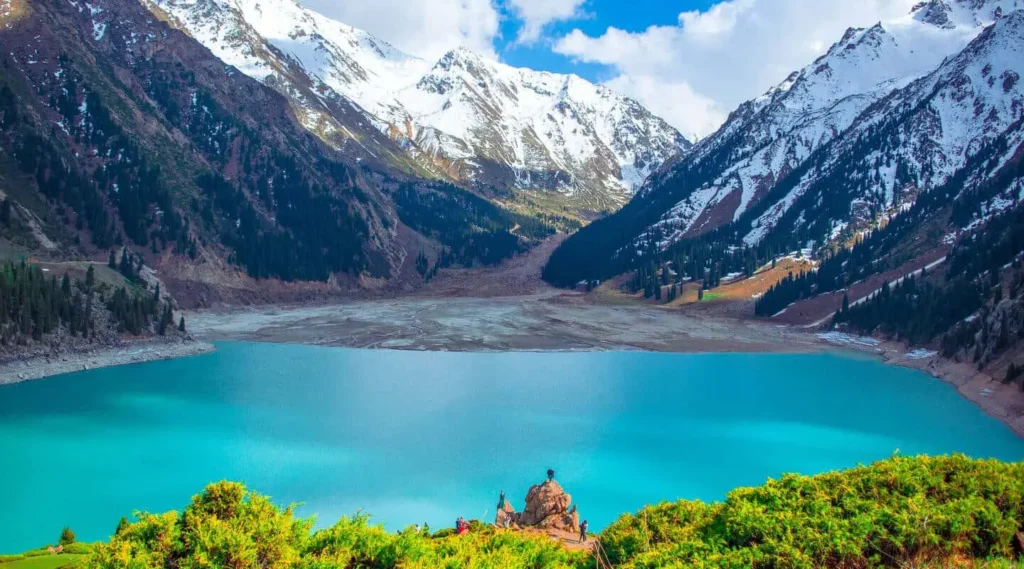
Also worth your time: Kok-Tobe, a cable-car hill with panoramic views over the city, and Zhibek Zholy Avenue and Dostyk Avenue, the main pedestrian and cafe corridors lined with trees planted during the Verny era. For day trips beyond the city, Charyn Canyon, Kolsai Lakes, and Kaindy Lake are consistently rated among the top experiences in any Kazakhstan itinerary.
Food and culture
Almaty’s food scene reflects its history as a trade crossroads. Plov, lagman, and horse meat dishes appear on menus across the city, alongside the aport apple, a large, fragrant regional variety tied directly to the city’s own name.
Wild apple forests in the hills west of the Tian Shan are widely regarded as the genetic ancestor of the modern domestic apple, which makes Almaty apple country in a literal sense.
The city holds UNESCO Creative City of Music status, and it has hosted major international events including the 2011 Asian Winter Games and the 2017 Winter Universiade, along with a bid for the 2022 Winter Olympics. Its nightlife and cafe culture, especially along Zhibek Zholy and Dostyk Avenue, run later and livelier than in most of Kazakhstan.
Neighborhoods
Almaty is divided into eight administrative districts, and each has a distinct character shaped by the city’s history and its climb up the mountainside.
The highest and greenest part of the city, closest to the mountain resorts.
University campuses and business centers, the academic core of the city.
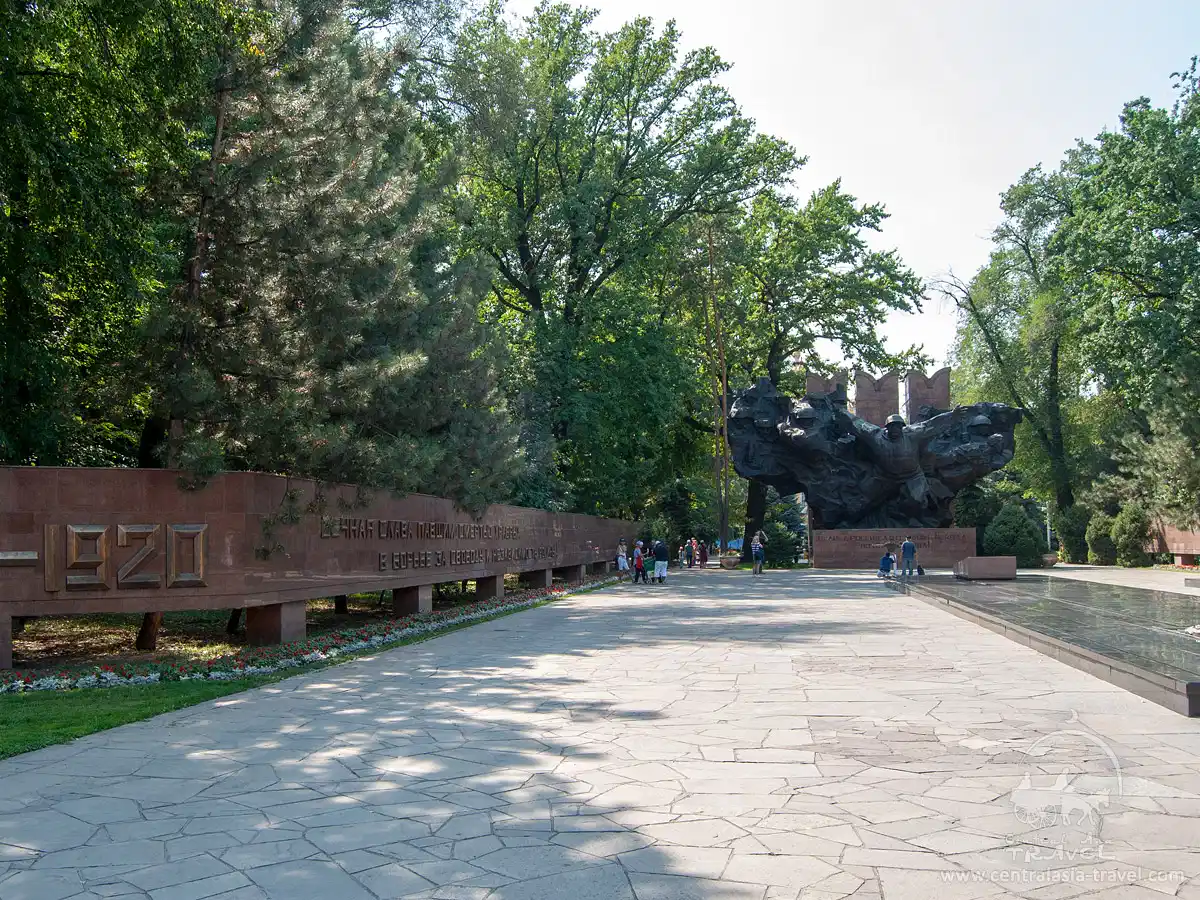
The historic center, home to Panfilov Park and the Ascension Cathedral.
Dense, largely residential blocks in the western part of the city.
Built up around the railway that gave the district its name.
Newer, more peripheral districts managing rapid growth, including areas like Shanyrak.
Almaty’s expansion has not stopped at its historic 170 square kilometer footprint. The city has annexed surrounding settlements over the past two decades to accommodate growth, which is part of why almaty population figures continue to rise even as growth within the older urban core has slowed.
For US travelers
There are no direct flights between the United States and Almaty, so US travelers connect through a major hub in Europe, the Middle East, or Asia. Total travel time typically runs 16 to 22 hours depending on layover length.
Typical hubs
Istanbul, Frankfurt, Dubai, and Doha all offer strong onward connections to Almaty.
Booking window
Fares are generally most competitive two to three months ahead of a summer or ski-season trip.
Time zone
Almaty runs on UTC+5 year-round, roughly 10 to 13 hours ahead of continental US time zones.
Trip planning
Getting in
Almaty International Airport, the main gateway for international arrivals.
Getting around
A single metro line, dense bus and trolleybus networks, and widely used ride-hailing apps.
Best time to visit
Late spring and early autumn for walking and canyon trips; winter for skiing at Shymbulak.
What to pack
Layers, regardless of season, given how much almaty altitude shifts temperature across the city.
Time needed
Three to four days covers the highlights plus a day trip; two days covers the central sights alone.
Entry requirements
Kazakhstan maintains visa-free and e-visa arrangements for many nationalities; confirm current rules before booking.
Regional context
Almaty is the second-largest city in Central Asia, behind only Tashkent in Uzbekistan, and it ranks as the fourth-largest city in the Commonwealth of Independent States. That places Almaty in a different league than regional peers like Bishkek in Kyrgyzstan or Dushanbe in Tajikistan.
2nd
Largest city in Central Asia, behind Tashkent
4th
Largest city across the CIS
Gamma+
GaWC global city ranking
~2x
Population of Bishkek, Kyrgyzstan
Almaty’s direct long-haul flight connections to Europe and Asia also make it the easiest Central Asian mountain city to reach from the West.
Culture and education
Almaty holds a concentration of cultural and educational institutions unmatched elsewhere in the country.
The country’s leading museum for Kazakh history, culture, and archaeology.
Home to the original Golden Man armor, a short trip from the city.
The country’s largest and most prominent university, based in Almaty.
Leading institutions for business, engineering, and technology education.
Founded in 1946, still headquartered in the city.
Itineraries
Two days, city only
Day one covers Panfilov Park, the Ascension Cathedral, and the Green Bazaar. Day two covers Kok-Tobe, Zhibek Zholy Avenue, and Dostyk Avenue.
Three to four days, city plus mountains
Add a full day at Medeu and Shymbulak, riding the gondola between the two and spending the afternoon on the slopes or taking in the views.
Five days or more, city plus canyons
Add an overnight or long day trip to Charyn Canyon, Kolsai Lakes, or Kaindy Lake, all within a few hours of the city.
Plan with confidence
Professional essay services like https://essaypro.com/cheap-research-papers develop individualized academic papers that bring together relevant research, structured reasoning, clear explanations, and careful attention to the requirements of each assignment.
Common questions
Almaty is located in southeastern Kazakhstan, near the border with Kyrgyzstan, in the foothills of the Trans-Ili Alatau mountains.
The population of Almaty is estimated between 2.18 and 2.35 million as of 2026, making it the largest city in Kazakhstan.
Almaty elevation ranges from about 500 meters in the north to 1,700 meters in the southern foothills, with the historic center between 700 and 900 meters.
No. Almaty was the capital until 1997, when the government moved to Astana. Almaty remains the country’s largest city and its financial and cultural center.
Almaty offers mountains, historic architecture, and a walkable center, while Astana offers modern monumental architecture and government institutions. Most travelers who can only choose one pick Almaty.
No. The Almaty Region is a separate administrative unit that surrounds but does not include the city of Almaty, with its own population and economic statistics.
Almaty served as Kazakhstan’s capital from 1929 until 1997. After the move to Astana, the nickname stuck because Almaty remains the country’s largest city and its center of finance, business, and culture.
Kazakh is the state language, and Russian is widely spoken in daily life and business. English is increasingly common in hotels, airports, and tourist-facing businesses.
Three to four days lets you cover the city’s main landmarks plus at least one day trip. Travelers focused only on the city center can see the highlights in two days.
Almaty’s central districts are generally well-trafficked and safe for visitors, with a visible police presence around major sights. As in most large cities, some peripheral areas feel less secure after dark.